Tree Removal in the Rio Grande Valley
A dead tree next to the house, a trunk that started to lean after a storm, or a big tree whose roots are lifting the driveway: some trees have to come down. Removal is work for a crew with the right gear, and a local pro can tell you whether the tree really needs to go or can be saved with a trim.
If a tree or branch is touching or near a power line, stay away from it and call your electric company or 911 first. Don't try to move it yourself.
When a tree needs to come down
Call for a removal quote if you see:
- A dead or mostly dead tree, with bare branches in a season when the trees around it have leaves.
- Large dead branches in the canopy. Tree experts call them the most obvious warning sign.
- Cracks or splits in the trunk or where big branches join it.
- Mushrooms, soft wood or hollows at the base.
- A new lean, especially if the soil on one side is cracked or lifted.
- Storm damage that took off more than half of the crown, or split the trunk.
- A tree in the wrong place: growing into the roof, the foundation, a wall or the lines over the street.
If a tree is cracked or leaning over your house, a car or a walkway, treat it as urgent. More detail in signs a tree is dying or dangerous.
Can it be saved with a trim?
Not every problem tree has to go. A tree with a few broken limbs, or branches rubbing the roof, can often be fixed with tree trimming for much less money. A good provider will tell you which one you need. If you hear "it all has to go" about a healthy tree, it's fair to get a second opinion.
Emergency removal after a storm
When a tree or a big limb falls on the house, a fence, a car or the driveway:
- Get people and pets away from the tree and anything it's touching.
- Look up. If wires are involved, call the electric company or 911 and stay back.
- Take photos of the damage for your insurance company before anything is moved.
- Call a tree pro to remove the tree and the limbs that are still hanging.
Expect emergency work to cost more than a scheduled removal, and be careful with anyone who knocks on your door right after a storm offering a deal. A local provider will give you a price before starting.
Stump grinding and stump removal
Cutting the tree down leaves a stump. You have two options:
- Stump grinding chews the stump down below the ground so you can cover it with soil and grass. The roots stay in the ground.
- Stump removal pulls out the stump and the main roots. It takes more work and leaves a bigger hole, but it clears the spot for building or planting.
Ask whether the quote includes the stump. Many providers price it separately.
What happens on a removal job
- The look. The provider checks the tree, what's under it and how a crew and truck can get to it.
- The quote. You get a price for the tree, the stump (if you want it gone) and the cleanup.
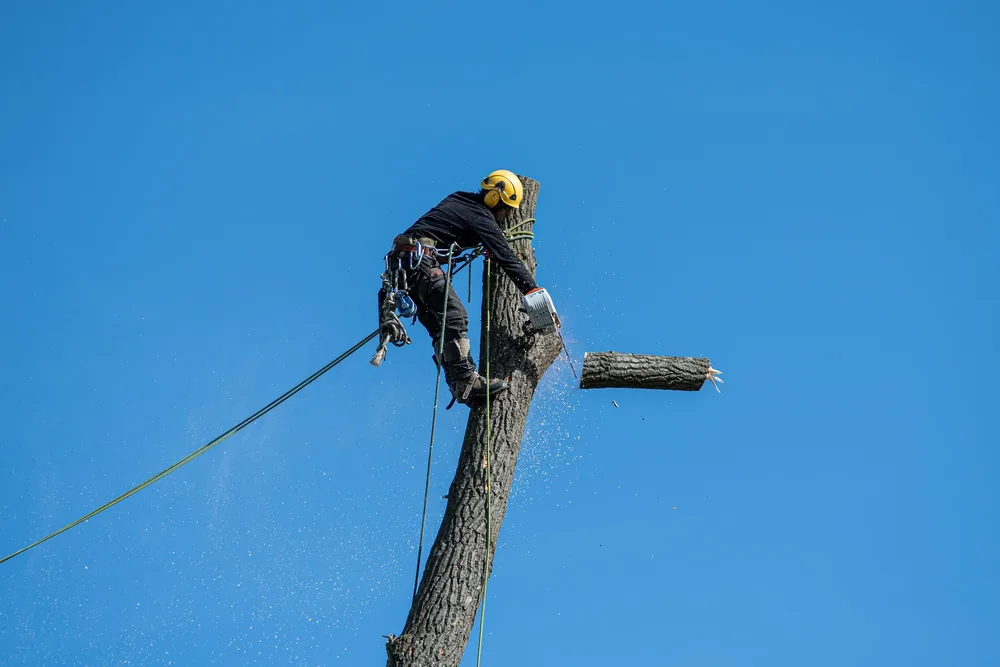
- The work. Small trees may come down in one piece. Big trees near a house may be taken down in sections, often with ropes, so nothing falls on the roof.
- The cleanup. Branches are chipped or hauled away and the logs are cut up or removed, depending on what you agreed.
How much does tree removal cost?
National cost surveys put most removals between about $200 and $2,000, with an average around $750 to $850. Height matters most:
| Tree height | Typical removal cost |
|---|---|
| Under 30 feet | $200 – $450 |
| 30 to 60 feet | $420 – $1,200 |
| 60 to 80 feet | $800 – $1,500 |
| Over 80 feet | $1,000 – $2,000 |
Stump grinding usually adds about $100 to $400. A tree close to the house or power lines can cost 25% to 50% more, hard-to-reach trees cost more, and emergency removal can cost much more. The provider will confirm the price before any work. More in tree removal cost in the RGV.
Before you hire
- Ask for proof of insurance. If a worker gets hurt or a limb hits your roof, insurance matters.
- Get the price in writing, even a text, and check what it includes: the stump, hauling the logs and branches, cleanup.
- Ask how they'll protect the house if the tree is close to it.
- Compare more than one quote on big jobs, and don't choose on price alone.
- Be careful with door-to-door offers after storms.
Tree removal across the Valley
Local providers serve homes in:
Tree removal FAQ
Do I need a permit to remove a tree on my property?
It depends on your city and your HOA. If the tree is in the parkway or city right-of-way, or your home has an HOA, check with them before the tree comes down.
Will the city pick up the branches?
Don't count on it. Some city brush programs only take branches from work the homeowner did, not from a tree company. Ask the provider to haul everything away and make sure it's in the quote.
Can I burn the branches?
Texas limits outdoor burning, city rules can be stricter, and counties can ban burning in dry weather. Hauling or chipping is the safer choice.
What if there's a bird nest in the tree?
Federal law protects the active nests of migratory birds, the ones with eggs or chicks. A good provider will check first and may wait until the birds have left.
Who is responsible if my neighbor's tree falls on my house?
It depends on the case, so talk to your insurance company. In Texas you can generally trim branches that hang over your side of the property line, but you can be held responsible if you damage the tree or your neighbor's property.
Need a tree taken down?
Call and talk to a local tree pro about your tree.